

Introduction
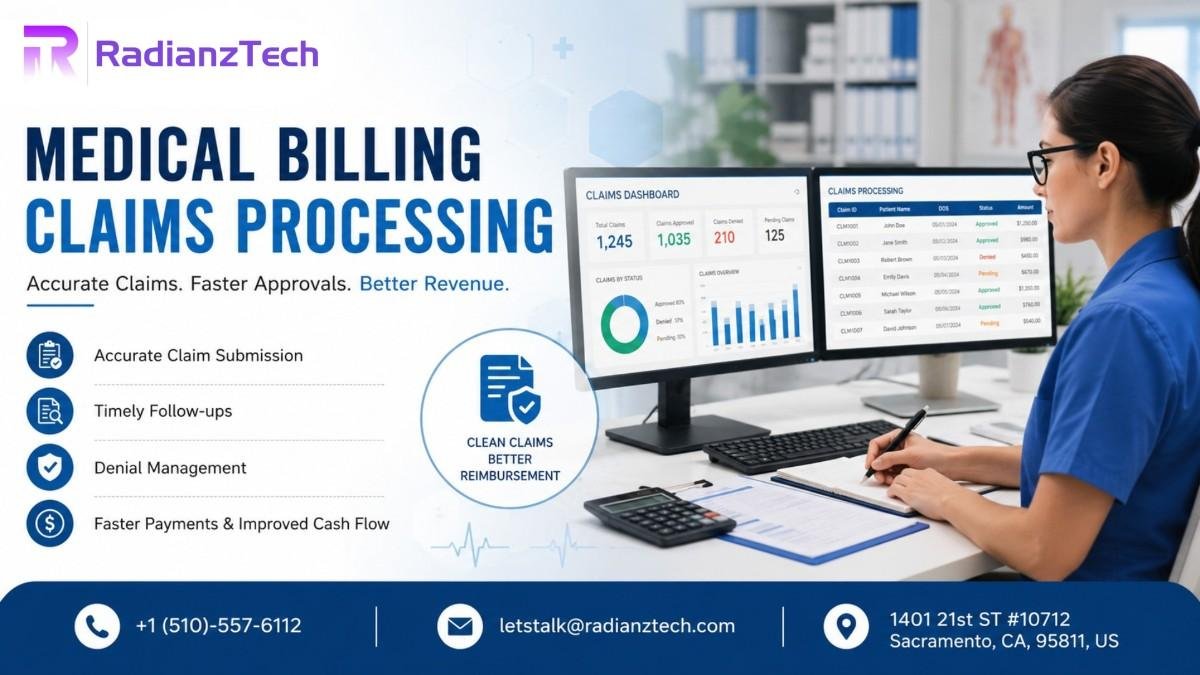
Every dollar a practice collects has to pass through the same narrow gate: a claim that gets processed correctly and paid on time. When that gate gets clogged with errors or delays, revenue slows down no matter how good the patient care was. Solid medical billing claims processing is what keeps that gate moving, turning treatment into payment without unnecessary holdups along the way. This guide breaks down what actually goes into processing claims well and why it matters so much for the overall health of a practice’s revenue cycle.
Why This Part of the Cycle Gets Overlooked?
Front-desk teams often focus on patient care and scheduling, treating claims processing as something that happens automatically in the background. In reality, this stage is where a huge amount of revenue either gets protected or quietly lost. Strong medical billing claims processing catches issues before they become denials, but only if someone is actually paying attention to the details instead of assuming the system will sort itself out.
Where Accuracy Starts
Long before a claim reaches a payer, its accuracy depends on what happened at registration and verification. Confirming coverage, checking eligibility, and capturing correct patient details all set the stage for a clean claim later on. Reliable medical insurance billing at this early point prevents a whole category of denials that have nothing to do with the treatment itself and everything to do with information that was wrong from the start.
Getting the Codes Right the First Time
Coding errors remain one of the most common reasons claims stall or get rejected outright. Skilled medical billing and coding services keep coders current on payer-specific requirements, since rules shift more often than most people expect. When codes match documentation precisely, claims sail through review instead of bouncing back for corrections that eat up time and delay payment for weeks at a stretch.
Moving Claims Through Without Delay
Once a claim is ready, speed becomes just as important as accuracy. Good medical billing services scrub claims for errors and submit them quickly, avoiding the common trap of letting paperwork sit around before it heads out the door. Faster submission means faster payer response, and faster payer response means revenue actually shows up when a practice needs it rather than months later.
A Quick Checklist for Cleaner Claims
Before any claim goes out, a few quick checks can prevent most common denials. Here’s what worth confirming every time:
- All patient details are absolutely correct – names, DOBs, policy numbers need to be identical to the payer’s
- Coverage has been successfully verified – as coverages change all the time, it doesn’t want to rely on an old verification
- Codes matched to documentation – each code needs supporting documentation
- Modifiers are accurately applied – missing or incorrect modifiers are the biggest source of many avoidable denials
- Claim was scrubbed before submission – catching errors internally beats waiting for a payer to catch them
Why Follow-Up Still Matters?
Submitting a clean claim doesn’t guarantee it gets paid without a hitch. Denials and underpayments still happen, and what separates the best medical billing services from average ones is what comes next. Persistent follow-up, quick appeals, and correcting errors without delay all protect revenue that would otherwise slip away simply because nobody chased it down.
Why RadianzTech Focuses Here?
Radianz Tech built its approach around every stage of this cycle, not just the moment a claim gets submitted. From verification and coding to follow-up, medical insurance billing services from Radianz Tech aim to keep revenue moving rather than stalling at any single point. The goal is a process practices can actually rely on, month after month, without constant firefighting.
Conclusion
A healthy revenue cycle depends on claims processing that works well at every stage, not just the parts that are easy to get right. Accuracy at registration, clean coding, fast submission, and real follow-up all need to work together consistently. If your practice wants to tighten up this process, Radianz Tech is ready to help. Reach out to Radianz Tech today and see how much smoother your revenue cycle can become.
FAQs
1. What is medical billing claims processing about?
It encompasses everything from ensuring insurance verification to coding and claim submission, as well as follow-ups on the claim until the payment is settled.
2. Why is the number of claims getting denied even though the treatment was quite clear?
The vast majority of denials occur because of minor mistakes in administration, such as mismatched patient information or non-aligned coding.
3. How does one know when the claims processing needs improvements at a practice?
An increasing number of denials, delayed payment, and regular resubmission are surefire indicators.
4. Is it worthwhile to outsource to the top-notch medical billing companies rather than handling the claims in-house?
Indeed, it might be, as a billing team would notice mistakes quicker and perform better follow-up than front office staff would do.